
A cruciate ligament injury in dogs is a tear or rupture of the ligaments in the knee, similar to a human ACL tear, often causing limping, pain, and stiffness.
It can result from sudden injury or the ligament’s chronic weakening due to age and degeneration.
Treatment options vary but often involve surgery for full tears, while partial tears may respond to rest, physical therapy, medication, and potentially knee braces.
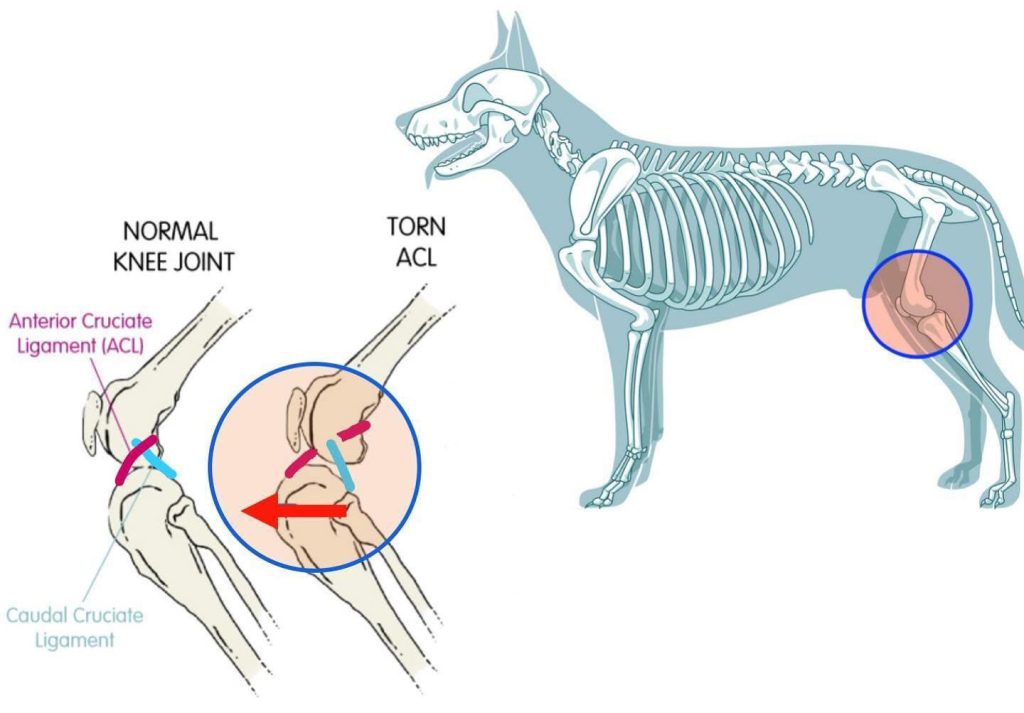
Causes
- Degenerative changes: the most common cause is the gradual weakening of the ligament due to age and repetitive stress.
- Trauma: sudden twisting motions or excessive strain during physical activity can lead to a tear.
- Obesity: excess weight can contribute to the overall stress on the joints and ligaments.
- Genetics: certain factors, like a high tibial plateau angle, can increase a dog’s risk.
Signs and Symptoms
- Limping: this is the most common sign, which may be sudden or gradual, and can worsen after exercise.
- Reluctance to move: your dog may be hesitant to jump, climb stairs, or play.
- Stiffness: stiffness when getting up or laying down is common, especially after rest.
- Sitting abnormalities: dogs may sit with the affected leg extended out to the side.
- Swelling: you might notice swelling around the knee joint.
- Muscle wasting: loss of muscle mass in the affected leg can occur over time.
Treatment Options
- Surgical repair: for complete tears, surgery is usually necessary to stabilize the knee joint. Common surgical procedures include Tibial-Plateau-Leveling Osteotomy (TPLO).
- Medical management: for partial tears, or in small, less active dogs, treatment may include:
- Rest and activity restriction: limiting exercise helps the ligament heal.
- Anti-inflammatory medications: to manage pain and inflammation.
- Physical therapy: rehabilitation exercises help improve strength and range of motion.
- Weight management: losing excess weight reduces stress on the joint.
- Knee braces: these can provide support and stability.
When to See a Vet
If you suspect that your dog has a cruciate ligament injury, it’s important to consult your veterinarian for a proper diagnosis and to discuss the best treatment plan.